The Ultimate Guide for Carpet Installation in Your Home
Installing new carpet is one of the best ways to upgrade your home’s comfort, enhance acoustic insulation, and boost overall property value. However, achieving a flawless, long-lasting finish requires careful planning, selecting the right materials, and executing each step with absolute precision.
If you are upgrading your property in California, our active fleet brings physical material catalogs and specialized teams directly to your door through our California Carpet Services Route.
In this ultimate guide, we break down every critical phase of the process so you can transform your space with complete confidence.
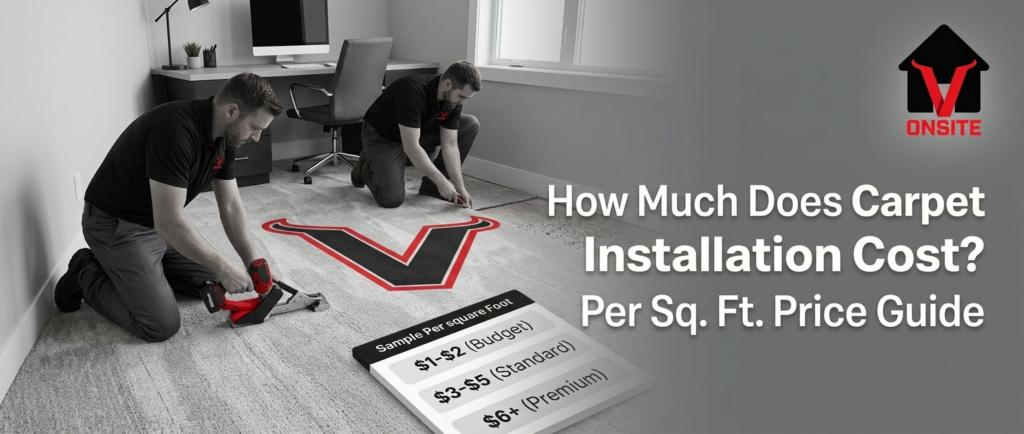
1. Cost Guides: How Much Does Carpet Installation Cost?

Before diving into any home renovation, establishing a clear budget is the essential first step. The overall cost of carpet installation depends on several variables, including your selected carpet fiber, padding density, and any necessary subfloor prep work.
- Average Cost Breakdown: Professional carpet pricing is typically calculated on a per-square-foot basis, combining material costs with labor charges.
- Wholesale Advantage: To avoid high retail markups and showroom overhead fees, explore our comprehensive Carpet Installation Cost Guide for a transparent, step-by-step pricing breakdown.
2. DIY vs. Professional: Is It Worth the Risk?
Many homeowners consider tackling the project themselves to save on labor. However, a DIY carpet installation comes with significant risks that could cost you more in the long run.
- The DIY Approach: Installing carpet requires specialized physical skills, tight seam work, and intense physical stretching. A minor mistake can leave you with loose, bubbling carpet.
- The Professional Advantage: Professional installers use advanced stretchers and seam irons to secure the carpet wall-to-wall, ensuring it lays completely flat and flatters the room for its entire expected lifespan.
- The Verdict: Is taking on the project yourself worth the gamble? Read our head-to-head comparison, DIY Carpet Installation vs. Hiring a Professional, to make the best decision for your home.
3. Underlayment: Why Carpet Padding Matters
Carpet padding is the unsung hero of any flooring project. Hidden beneath the surface, your underlayment plays a vital role in how your new floor feels and how long it lasts.
- Impact Absorption: High-density padding absorbs the impact of heavy daily foot traffic, preventing carpet fibers from crushing and wearing down prematurely.
- Insulation & Comfort: The right padding adds luxurious underfoot cushioning and improves your room’s thermal and acoustic insulation.
- Choosing Density: To learn how to pair the perfect padding with your selected carpet style, check out our guide on Why Carpet Padding/Underlayment Matters.
4. Preparation: How to Prepare Your Home & Subfloor
A beautiful installation relies entirely on the quality of the foundation beneath it. Preparing your home and your subfloor correctly before the crew arrives prevents delays and guarantees a smooth installation day.
- Tear-Out and Cleaning: Old carpet and tack strips must be carefully removed, and the subfloor must be thoroughly cleared of dirt, dust, and old adhesive.
- Leveling and Moisture Check: Any dips or cracks in concrete or wood subfloors must be leveled, and moisture levels must be verified to prevent mold growth beneath your padding.
- Prep Checklist: Follow our step-by-step guide on How to Prepare Your Home and Subfloor Before Carpet Installation to ensure your space is ready.
5. Tools: Must-Have Tools for a Seamless Installation
To achieve seamless transitions and flat, wrinkle-free surfaces, standard household tools simply won’t cut it. Professional results require highly specialized equipment.
- Key Equipment: Power stretchers, knee kickers, carpet seam irons, wall trimmers, and specialized seam rollers are absolute necessities.
- The Complete Kit: Whether you are curious about the technical process or setting up your own toolkit, check out our checklist of the Must-Have Tools for a Seamless Carpet Installation.
6. Measurement: How to Measure a Room for Carpet
Ordering the correct amount of carpet is a balancing act. Buying too little delays your project, while buying too much leads to expensive, wasted material.
- The Basic Formula: Multiply the room’s length by its width to find the base square footage, then add a standard 10% wastage factor to account for cuts and seams.
- Handling Irregular Rooms: To learn how to measure complex L-shaped rooms or hallways without making costly errors, read our guide on How to Measure a Room for Carpet (Free Formula).
Local California Route Planning & Mobile Showroom Services
We make home renovations effortless by bringing the showroom directly to you. Our fully equipped mobile consultation trucks carry hundreds of physical carpet and window treatment samples directly to your driveway. This allows you to check textures and match colors perfectly under your home’s actual lighting.
If you live near our active California dispatch hubs, we are ready to serve you:
- San Diego County Support: For properties in Santee and surrounding neighborhoods, visit our Carpet Flooring & Window Treatments in Santee, CA page.
- Central Valley Support: For properties in Merced—including ZIP codes 95340, 95341, 95344, and 95348—visit our localized Flooring Installation & Window Treatments in Merced, CA page.
Ready to inspect premium carpet materials right in your living room? Call our dispatch desk today at +1 855-579-2491 to schedule your free on-site consultation!